

The 3D Cloud Furniture Shopping Trends Study 2026 reveals a pivotal shift in furniture retail: 3D visualization is no longer a differentiator; it’s an expectation. In this third wave of research, we found that hybrid shopping remains dominant, visualization continues to be a major barrier to purchase, and shoppers who use 3D tools spend more, buy more, and feel more confident. This year’s study uncovers how 3D room planners, configurators, and in-store visualization tools are driving higher satisfaction, stronger purchase intent, and bigger baskets.
- Background and objectives
- Methodology
- How hybrid shopping trends evolve
- Visualization remains a major pain point
- 3D closes the confidence gap
- 3D drives purchase confidence
- In-store 3D boosts satisfaction and spending
- 3D room planner benefits and usage
- 3D product configurator benefits and usage
- 3D visualization and the future of furniture shopping
- 3D Cloud Furniture Shopping Trends Study 2026 ebook download
3D Cloud Furniture Shopping Trends 2026 background and objectives
3D Cloud, a leader in 3D product visualization platforms, continues to help enterprise retailers transform how customers shop across digital and physical channels.
In partnership with Provoke Insights, this year’s research examined:
- How consumers navigate the furniture shopping process, including the role of the salesperson.
- Where consumers struggle most to visualize furniture.
- How and when 3D tools influence purchase decisions.
- How exposure to 3D tools is reshaping shoppers’ expectations of furniture retailers.
3D Furniture Shopping Trends 2026 methodology
In this third wave of research, Provoke Insights developed and conducted a 50-question online survey among 400 furniture purchasers. All participants met the following criteria.
- Spent $500+ on furniture in the past 6 months
- Household income of $50K+
- Ages 25-69
- Lives in the United States
How hybrid shopping continues to evolve
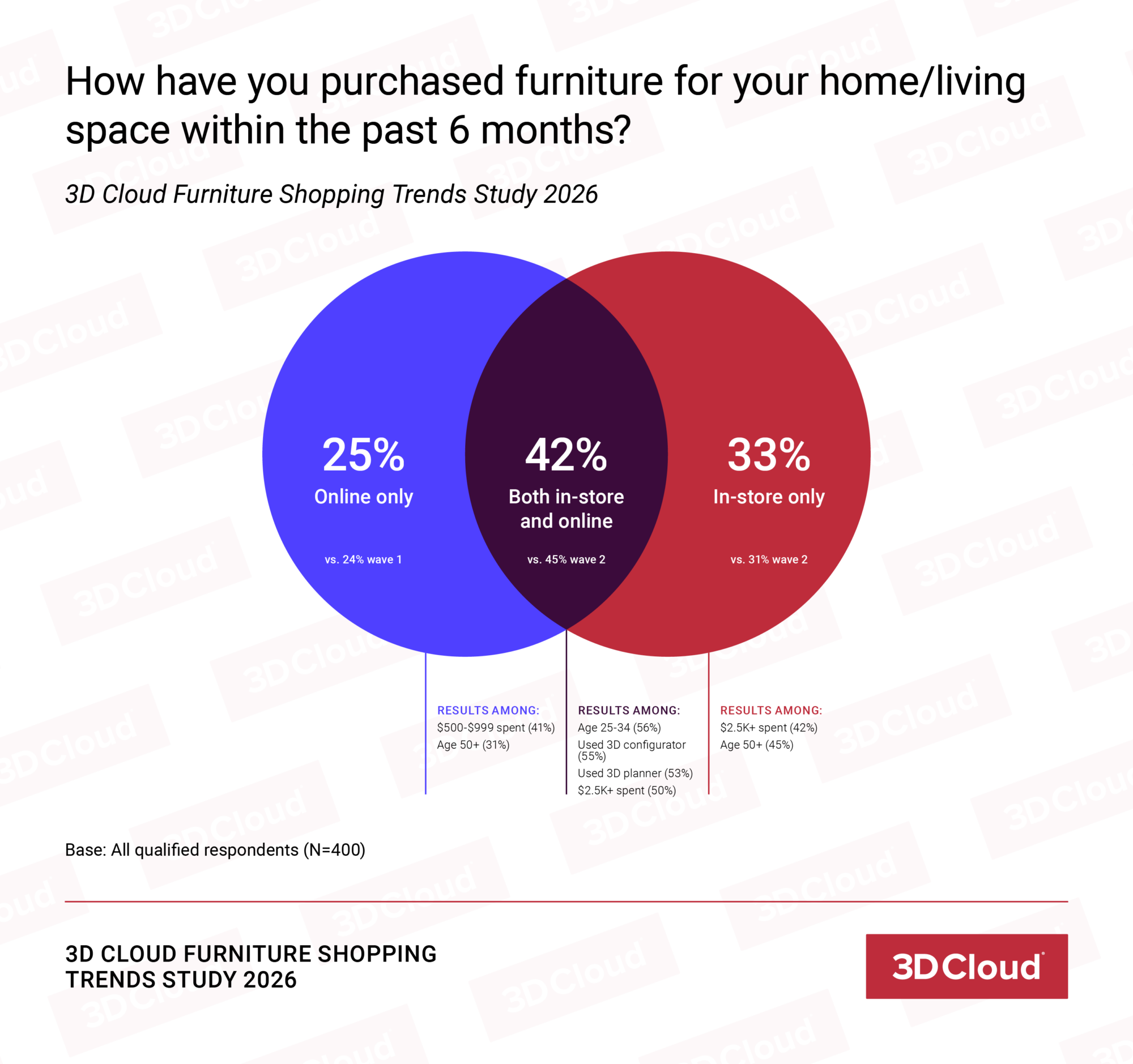
Hybrid shopping remains the dominant approach, especially among those leveraging 3D tools.
- 42% shop both in-store and online
- 25% shop online only
- 33% shop in-store only
Consistent with 2025 findings, most shoppers continue to browse websites before purchasing in-store. However, there has been a slight increase in consumers who visit a store first and then finalize their purchase online.
Visualization remains a major pain point
62% of shoppers say it is a challenge to visualize how furniture will look in their home.
That uncertainty creates hesitation, especially when making higher-ticket purchases. When shoppers can’t picture scale, color, or fit, confidence drops. This visualization gap is where 3D tools create a measurable impact.

3D closes the confidence gap
As shoppers become more familiar with interactive visualization, expectations evolve.
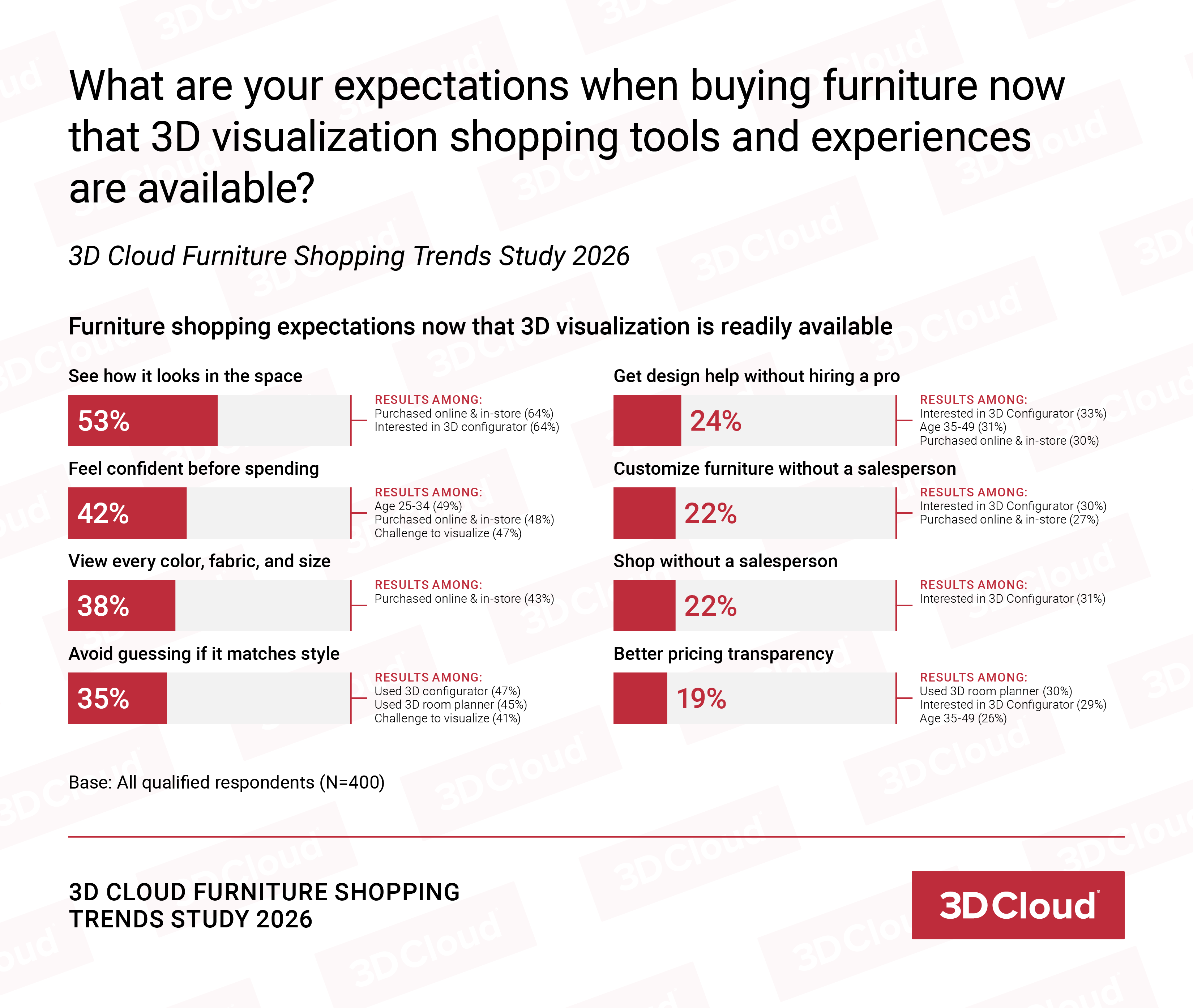
Consumers increasingly want to:
- Explore products in their own space
- Customize options before committing
- View every color, fabric, and size
- Avoid guessing if it matches style
3D drives purchase confidence
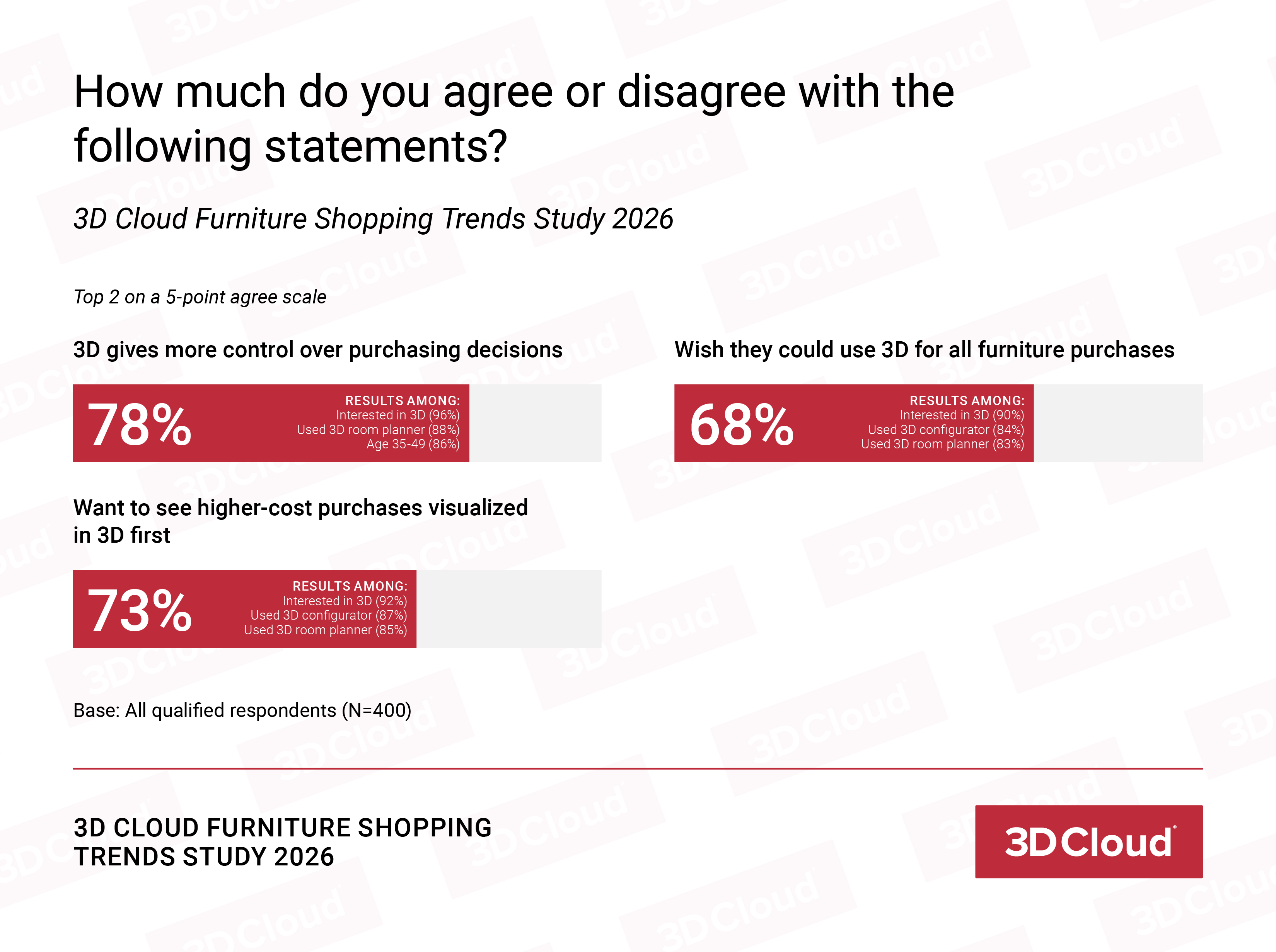
The most helpful features for visualizing furniture on a device are the ability to rotate the view and configure the product. 78% of consumers say 3D gives more control over purchasing decisions. Consumers who are less confident in their design skills are especially appreciative of augmented reality.
In-store 3D boosts satisfaction and spending
While 87% of in-store shoppers interact with a salesperson, only 30% experience 3D visualization during that interaction. Virtually all shoppers whose salesperson used a 3D or AR visualizer tool believe it improved the shopping experience.
3D room planner benefits and usage
Furniture shoppers continue to be reliant on 3D room planners.
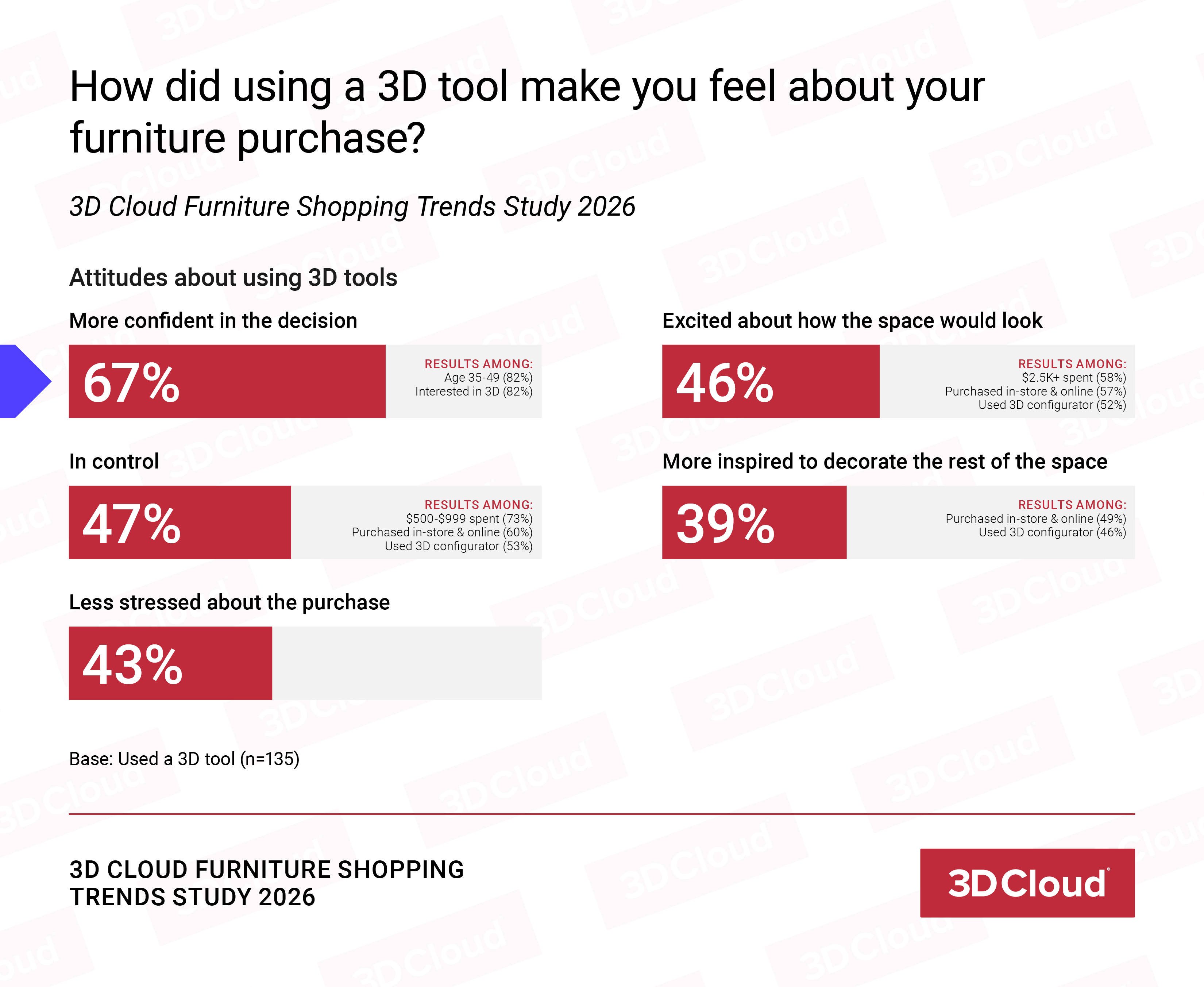
They said it helped them mix and match furniture more confidently and encouraged them to discover new styles. Two-thirds of 3D tool users say it gives them more confidence in their purchase decisions, and higher-budget shoppers also expressed greater excitement about their final space.
Those using room planners in 2025 were more likely to be aged 35–49 and to shop both online and in-store. By 2026, usage shifted younger, with 3D planners most popular among consumers aged 25–34, hybrid shoppers, and males.
3D planner use turns purchase intent into action.
Nearly all shoppers go on to buy furniture, and over a quarter purchase everything they saw in the planner.
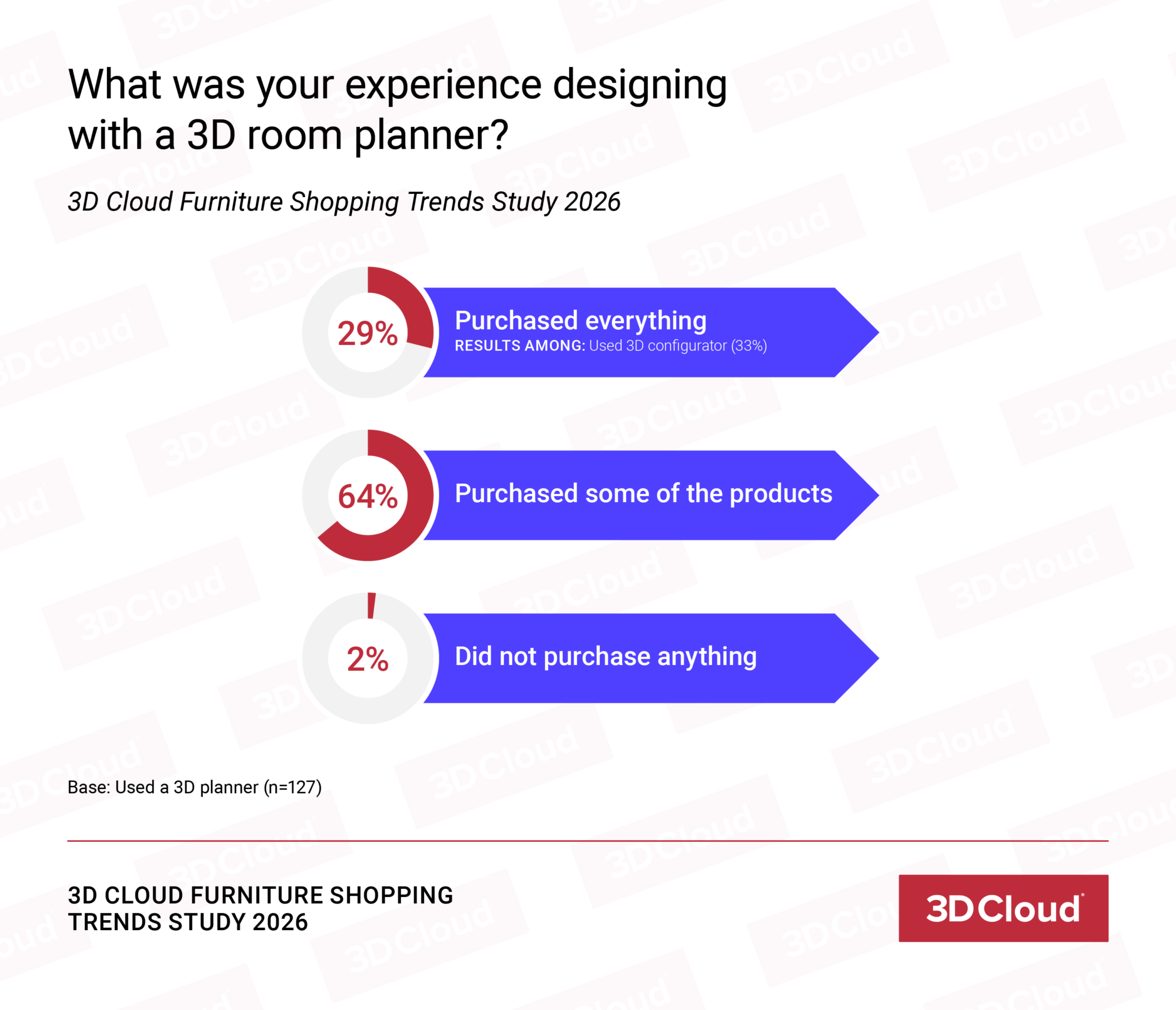
Here’s what shoppers said about their experience with 3D room planners:
- “It helped me visualize how the furniture would fit in my space and whether the color and material was a good fit.”
- “It made my decision much easier to narrow down my original options.”
- “Very helpful for visualizing, customizing and making purchase decisions with confidence.”
- “I thought it was incredibly helpful and let me get an idea of how everything would fit and lay within the room.”
3D product configurator benefits and usage
72% customize their furniture purchases.
Color and fabric/material are the most popular options to customize.
Among those who customized their furniture, four of 10 utilized a 3D product configurator. Younger and hybrid shoppers were more apt to use a product customization tool. 80% of users found the 3D configurator very helpful. They said it gave them confidence in their furniture-buying decisions.
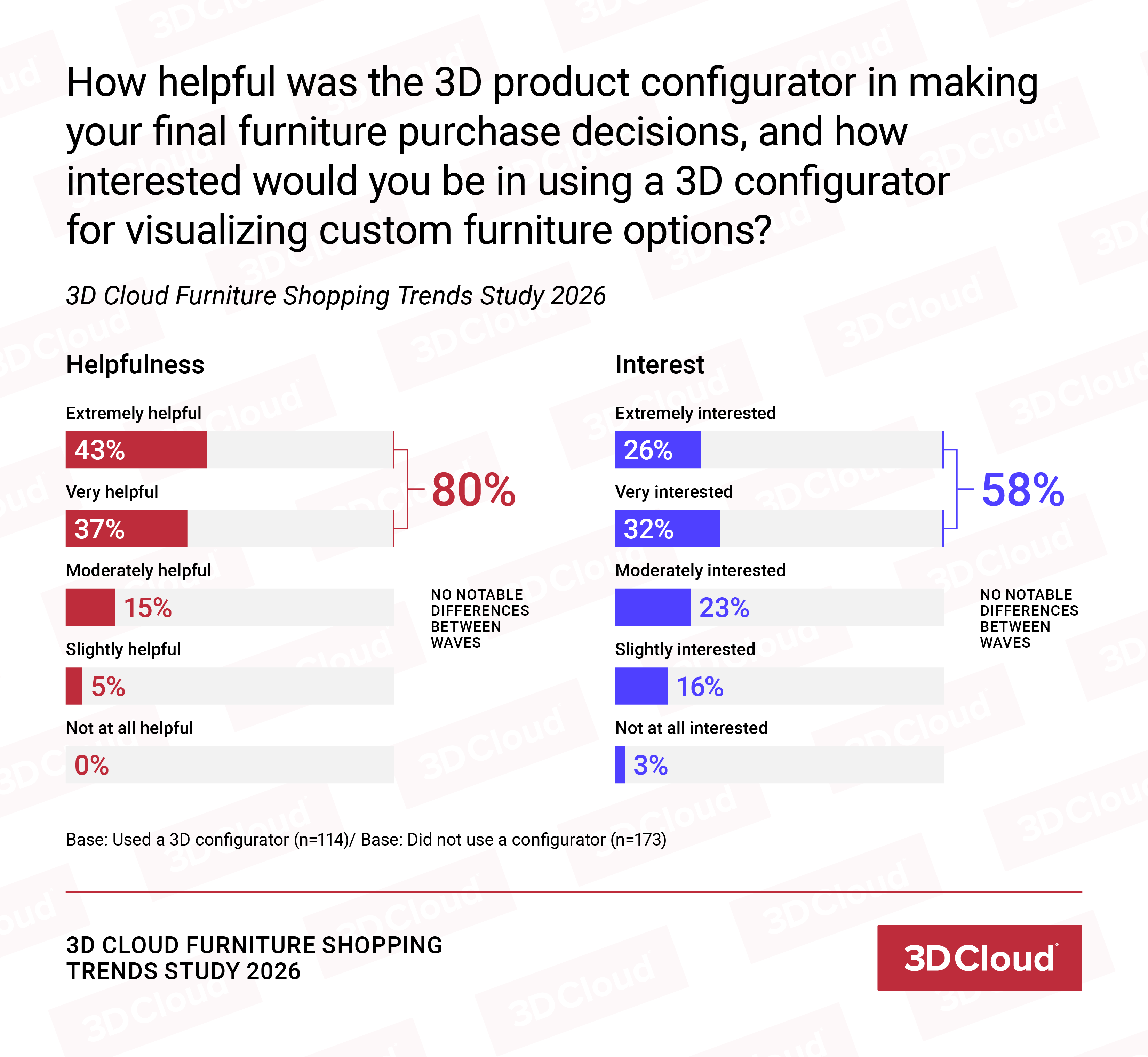
Here’s what shoppers said about their experience with 3D room planners:
- “It was a very simple yet intuitive way to visualize exactly what choices I wanted.”
- “Customization tool that allows me to visualize and customize products specifically for me.”
- “It was straightforward and user-friendly, with clear options and real-time previews that made customizing the furniture easy.”
- “It was fun to make your own choice, customize the product.”
3D encourages larger purchases.
Perhaps the most compelling insights from this year’s study:
Shoppers who use 3D tools are more likely to exceed their original purchase plans. Visualization increases confidence. Confidence reduces hesitation. Reduced hesitation increases basket size.
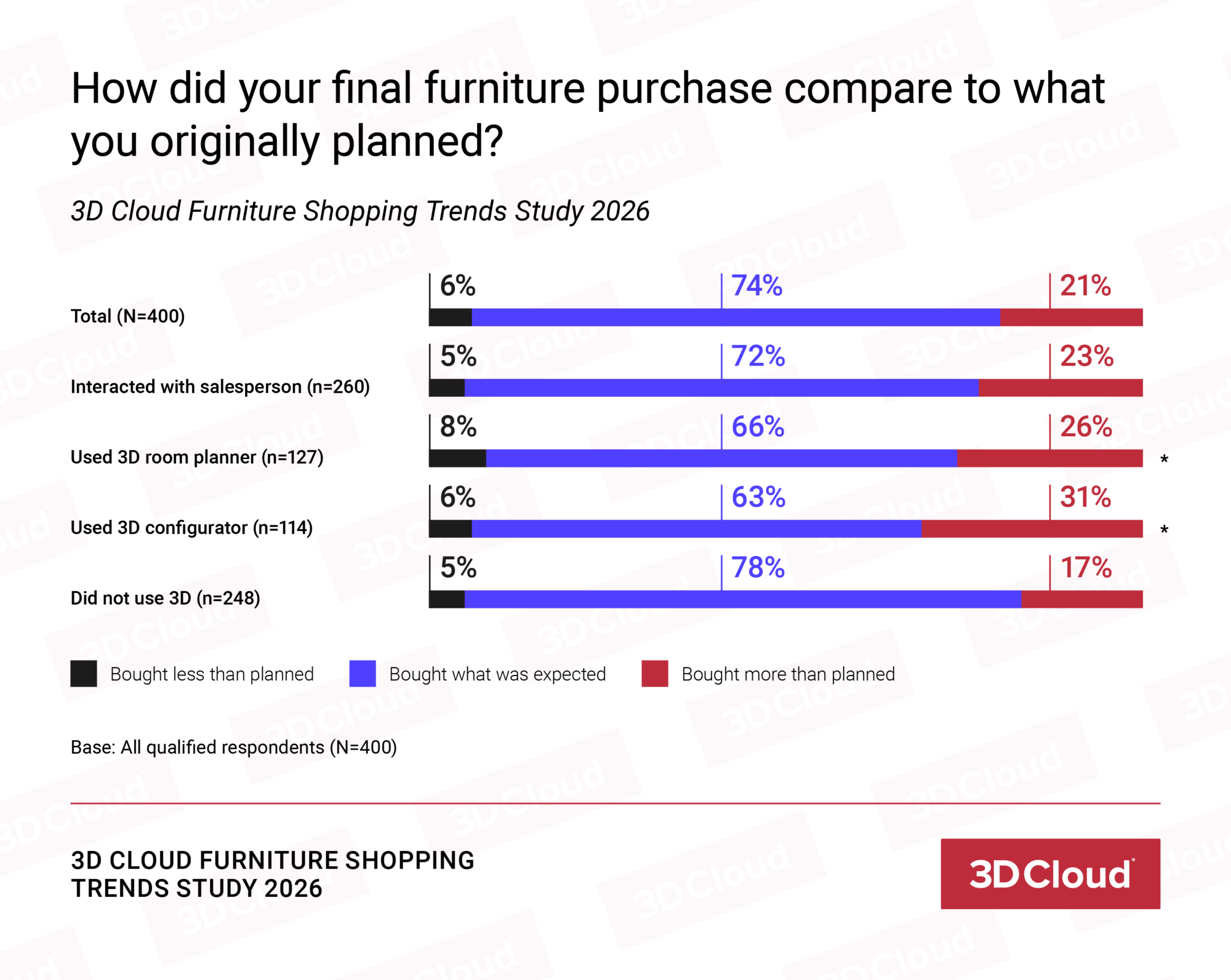
When customers can see how pieces work together, whether through a room planner or configurator, they are more inclined to complete the look. 3D is influencing not just experience, but revenue.
3D visualization and the future of furniture shopping
Consumers expect interactive visualization across the entire buying journey, from early browsing to final purchase.
This shift is particularly strong among younger consumers, hybrid shoppers, and those with higher engagement in customization. As 3D adoption grows, it is becoming a baseline expectation, raising the bar for retailers to deliver more immersive, confidence-building experiences both online and in-store.
Download the complete 3D Cloud Furniture Shopping Trends 2026 report