
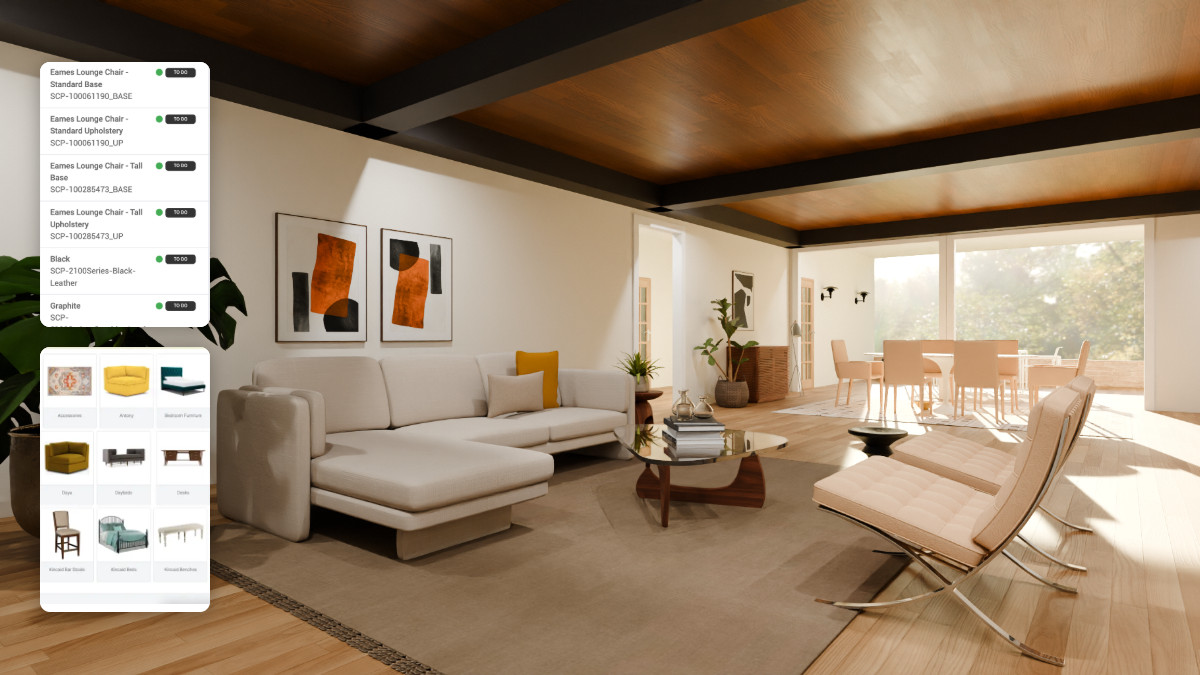
Everything you need to evaluate, compare, and choose the right 3D DAM platform for your furniture retail or manufacturing business.
- Introduction: 3D is now a shopper requirement
- Why enterprise retailers need a 3D DAM
- Primary use cases for a 3D DAM
- Key features to evaluate
- 3D Cloud 3D DAM
- Vendor scorecard: quick reference guide
- Download the full buyers guide
Introduction: 3D is now a shopper requirement
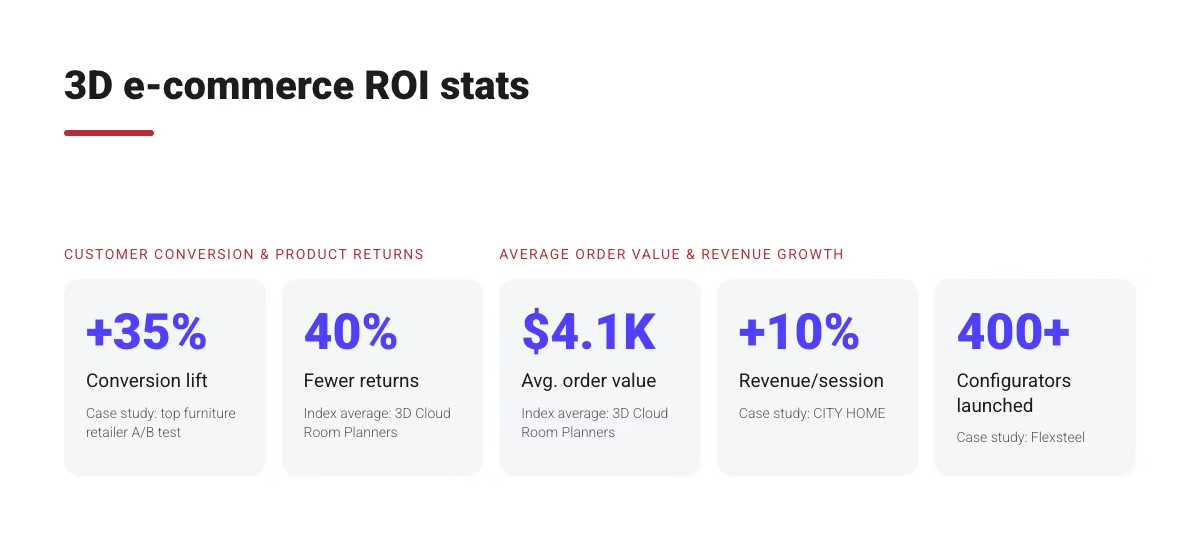
73% of consumers shopping for higher-priced products consider 3D modeling, visualization, configuration, and design requirements, not perks. (3D Cloud Furniture Shopping Trends Study 2026)
Retailers and manufacturers across residential, office, kitchen, and decking now manage ever-expanding catalogs of highly configurable, highly complex products. Yet many still run their 3D content on spreadsheets, shared drives, manual workflows, and siloed systems. The result is content that is hard to keep accurate, accessible, secure, and up to date.
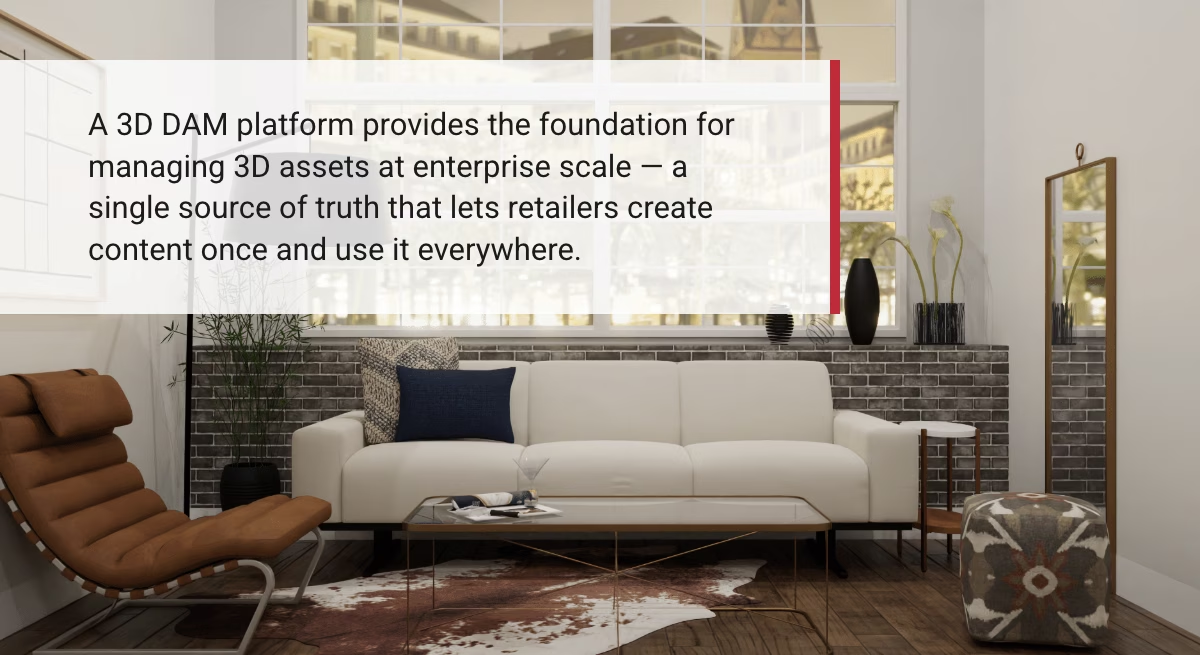
A 3D digital asset management (DAM) platform fixes that. It centralizes, organizes, manages, and distributes 3D models across every channel, so teams create content once and use it everywhere, without adding staff. In this guide, we’ll review the capabilities and evaluation criteria that matter most when choosing an enterprise 3D DAM.
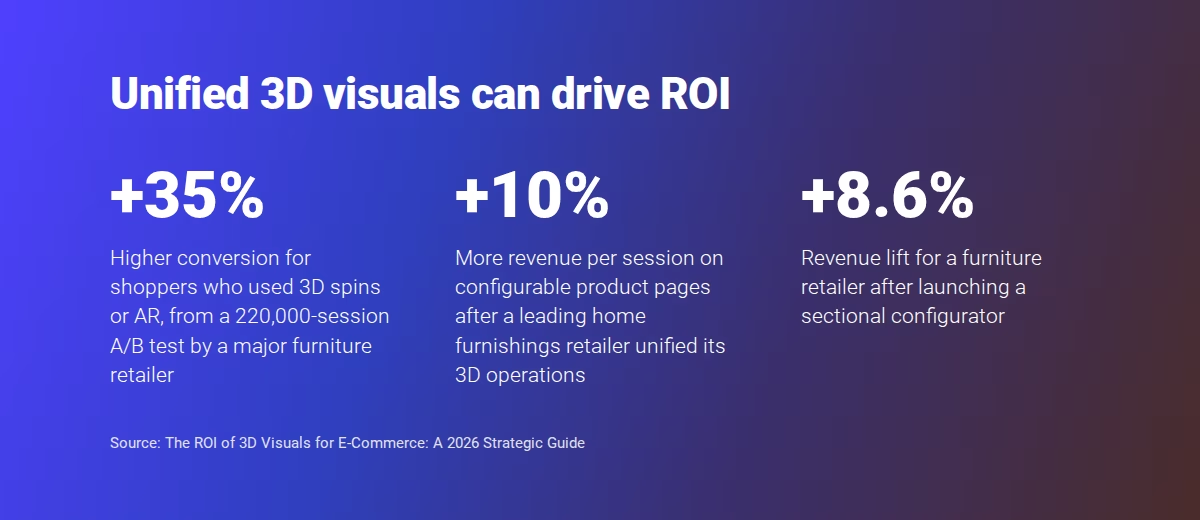
Source: The ROI of 3D Visuals for E-Commerce: A 2026 Strategic Guide
Why enterprise retailers need a 3D DAM: the challenges
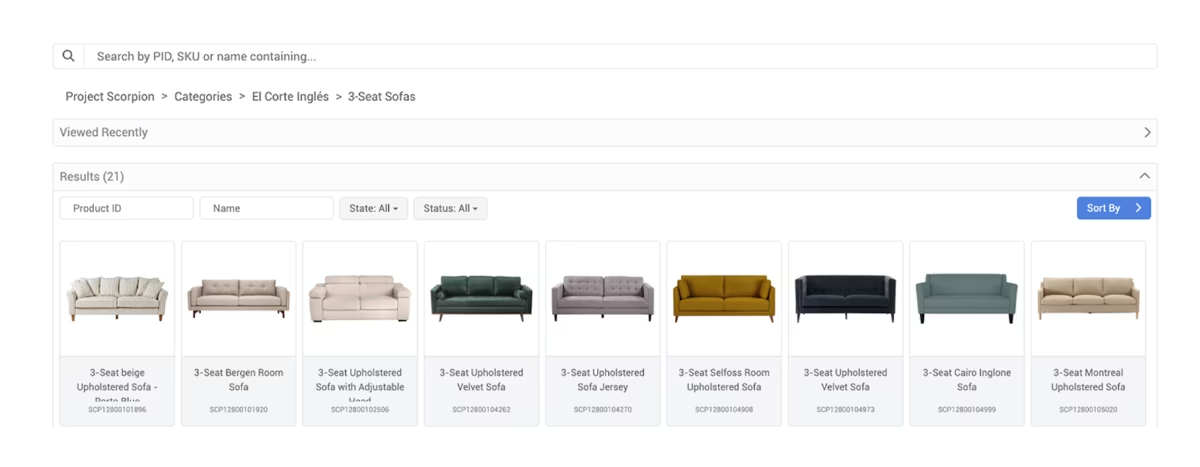
Every configurable product carries its own dataset: meshes, models, materials, finishes, configuration data, and product attributes. Spread that across multiple visualization apps and CGI vendors, and the same problems show up again and again.
Common challenges furniture retailers face include:
- Version control and asset inefficiency: 3D models stored across multiple systems lead to duplicate asset creation, extra content costs, and inconsistent product experiences across channels
- Workflow silos and configuration complexity: Disconnected apps make it hard to reuse 3D assets across channels and complicate PIM and ERP integrations
- Operational friction: As SKUs scale, manual workflows, spreadsheets, and shared drives delay approvals, slow launches, and hide asset status, ownership, and readiness
Primary use cases for a 3D DAM
Product catalogs often hold tens or even hundreds of thousands of SKUs. A 3D DAM is most valuable in three enterprise scenarios:
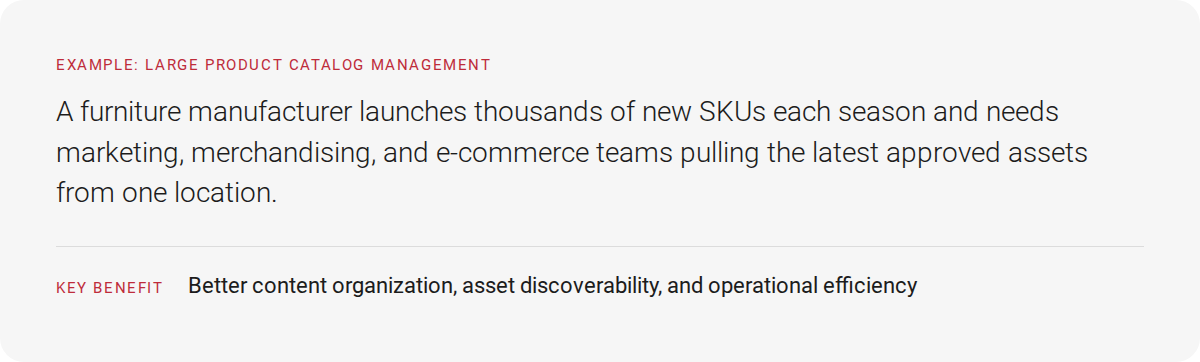
- Large product catalog management: A centralized home to create, organize, and maintain the assets behind thousands of products, so teams can find and use approved assets fast.
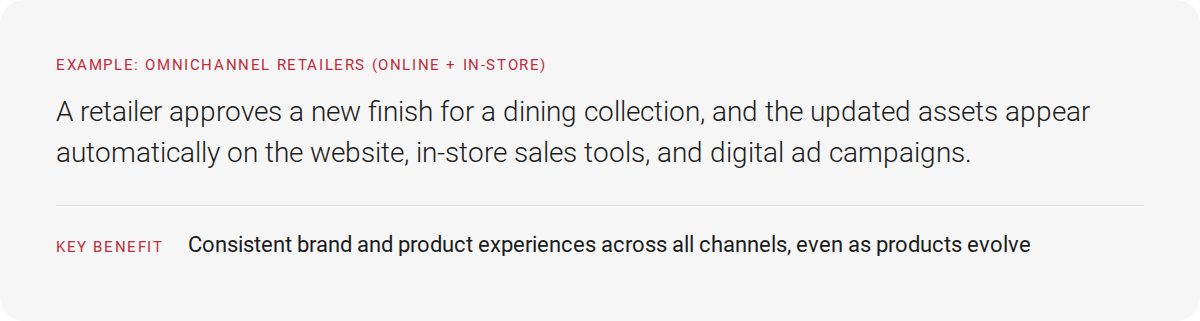
- Omnichannel retailers (online + in-store): Approved assets flow to every channel with less duplication and manual effort, so product content stays consistent wherever customers meet the brand.
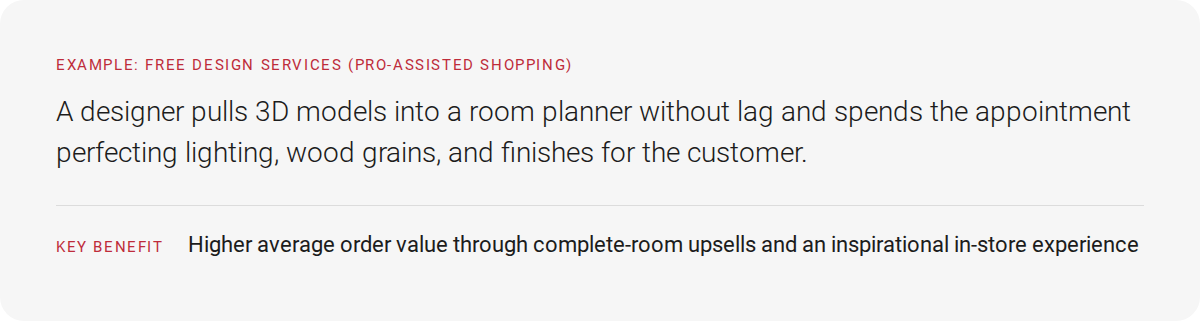
- Free design services (pro-assisted shopping): Web-ready 3D models feed straight into room planners and configurators, so designers focus on product selection, layout, and inspiration instead of image creation.
Key features to evaluate: what matters most for enterprise buyers
To help you select the right 3D DAM platform, here are the five capabilities an enterprise-grade platform should provide:
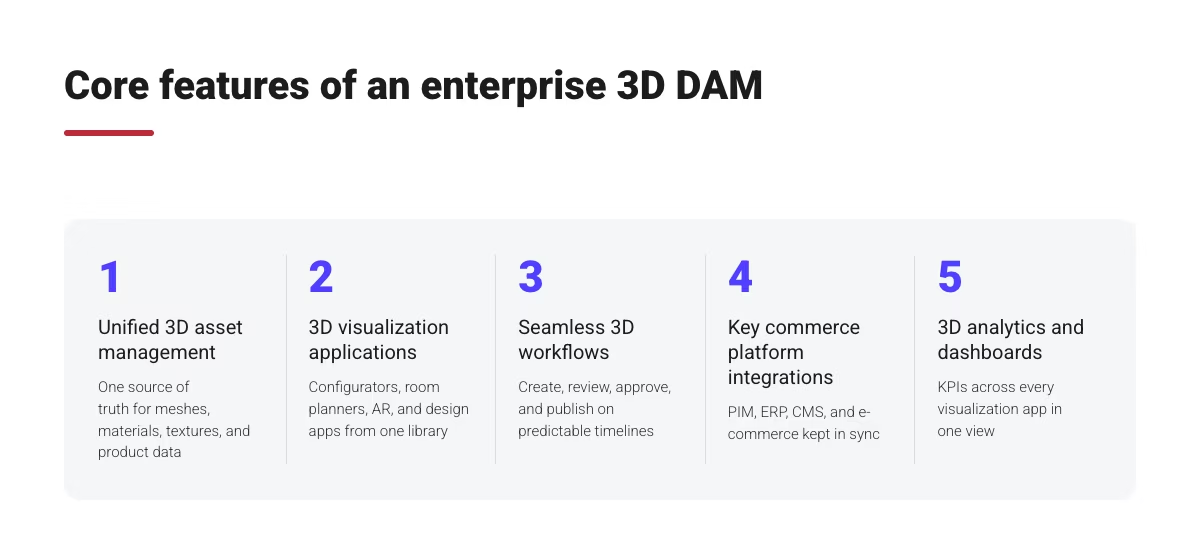
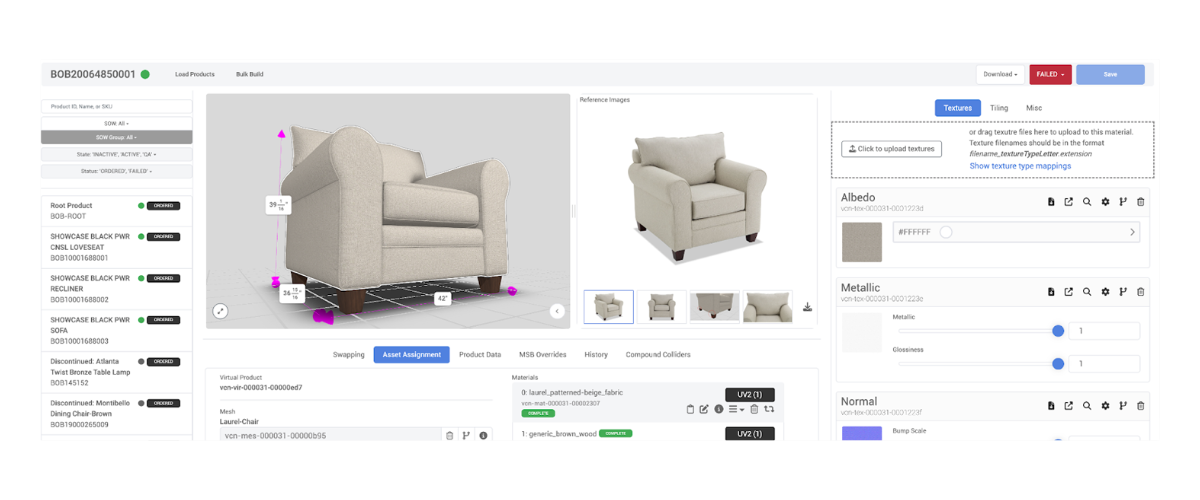
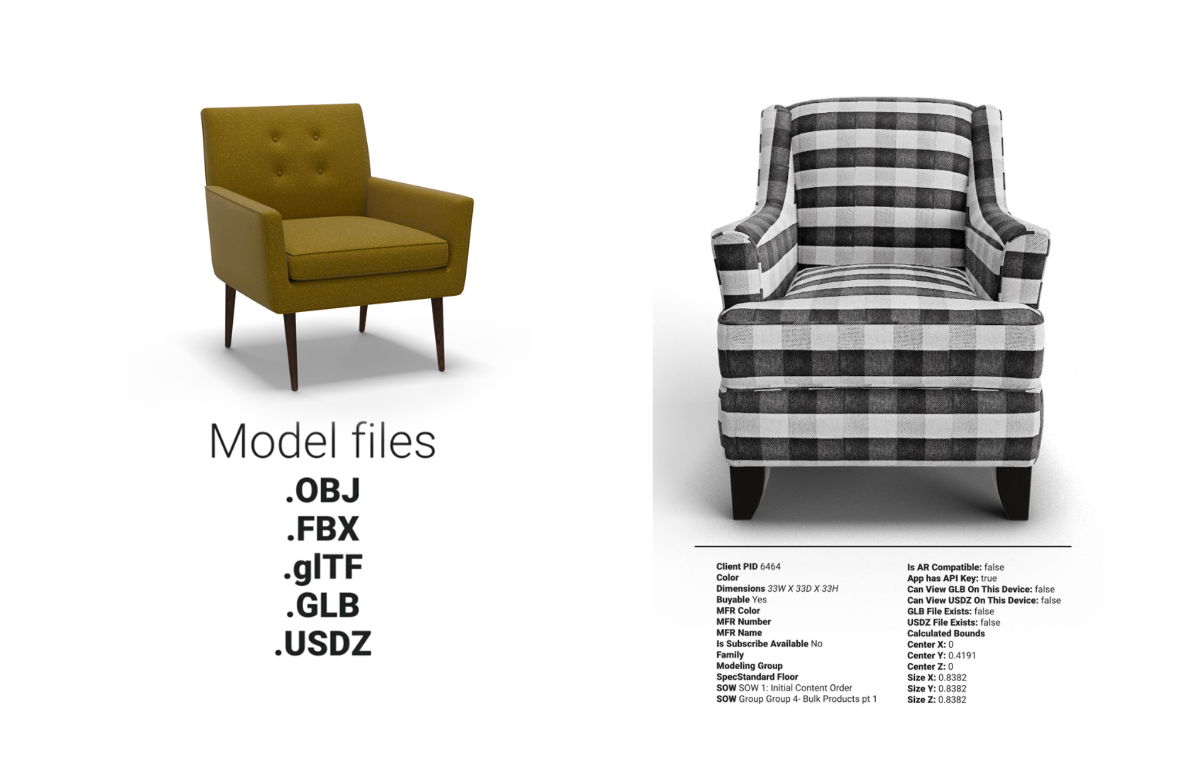
- Unified 3D asset management: Centralizes meshes, models, materials, textures, imagery, and product metadata in one system. Look for version control, consistent metadata, and the governance to scale with large catalogs.
- 3D visualization applications: A modern DAM goes beyond storage to feed product configurators, room planners, AR, product renders, and digital sales tools from one shared asset library. Look for control over pricing, promotions, availability, and configuration logic so sales teams can quote made-to-order products quickly.
- Seamless 3D workflows: Assets move between merchandising, marketing, e-commerce, design, and IT. Look for built-in review and approval, predictable creation timelines, and clear content governance.
- Key commerce platform integrations: A DAM delivers the most value inside a connected stack. Look for PIM, ERP, CMS, and e-commerce integrations that sync product data and assets automatically.
- 3D analytics and dashboards: Track KPIs across every visualization app from one dashboard. Look for asset use and reuse reporting, readiness and coverage visibility, and insight to guide content investment.
3D Cloud 3D DAM: the leading enterprise-grade platform
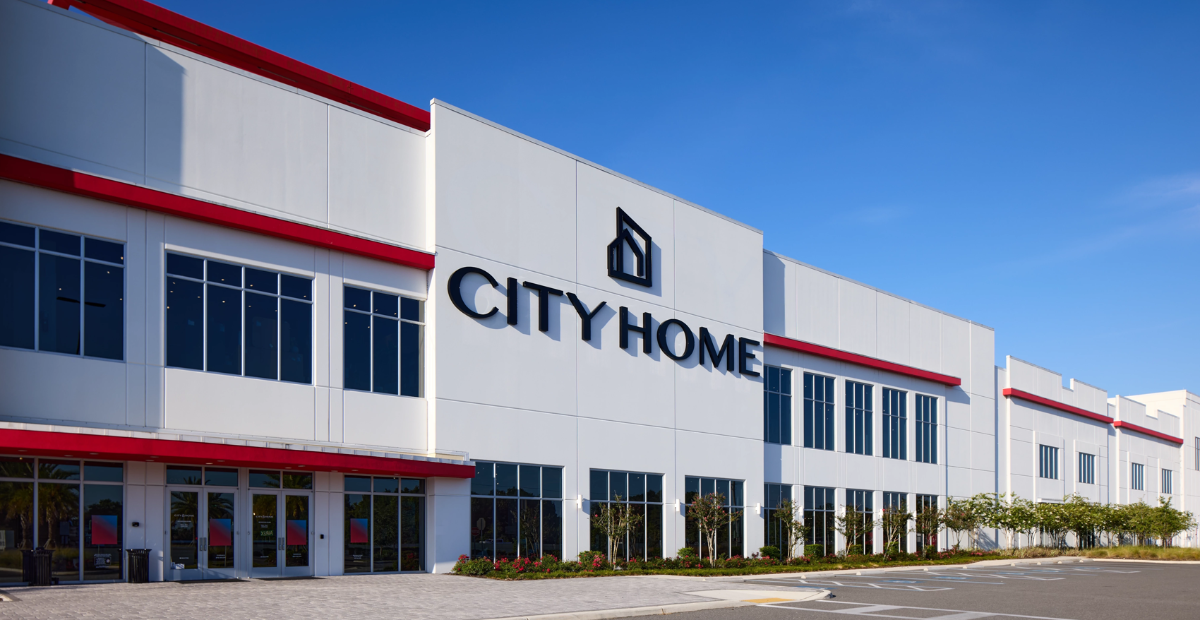
With roots firmly in 3D product visualization and enterprise digital asset management, 3D Cloud has become known as the leader in 3D product configuration and visualization for the home furnishings and contract furniture industries. It supports top enterprise furniture, kitchen, and DIY retailers and manufacturers across the US, UK, and EMEA, including La-Z-Boy, CITY HOME, Raymour & Flanigan, and American Furniture Warehouse.
3D Cloud 3D DAM was built for highly configurable residential and commercial furniture, kitchen, and decking catalogs. The platform delivers a 50% increase in visualization output and up to a 90% per-image cost reduction, all without adding headcount. Key capabilities include:
- Self-service, no-code content workflows with automatic version detection
- Flexible multi-category product taxonomy
- Automated 4K photorealistic and bulk rendering
- Visual QA and content history
- Business-logic product data integration
- Connected workflows across the full 3D Cloud suite and your PIM and CMS
- Hands-on, phased onboarding
The customers:
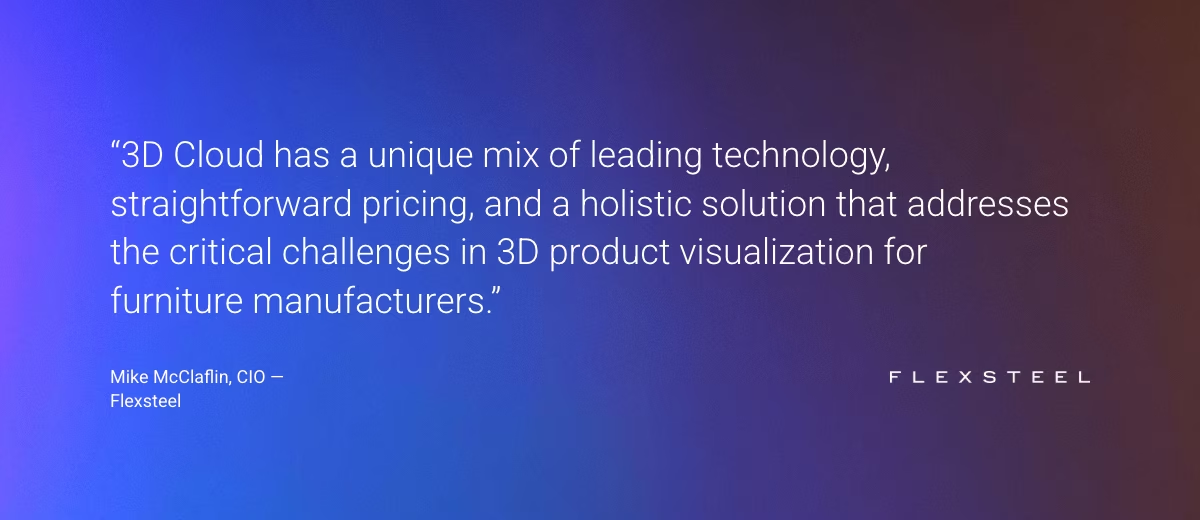
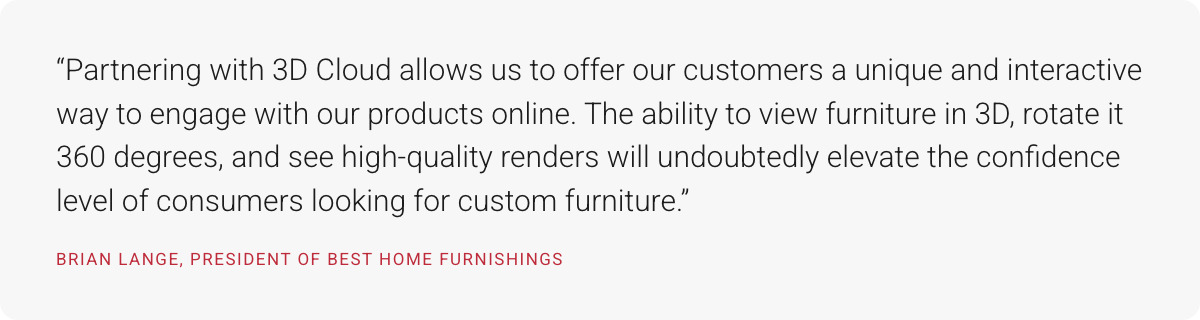
3D Cloud customers include CITY HOME, Joybird, La-Z-Boy, Bob’s Discount Furniture, Design Within Reach, Flexsteel, Raymour & Flanigan, American Furniture Warehouse, and Best Home Furnishings.

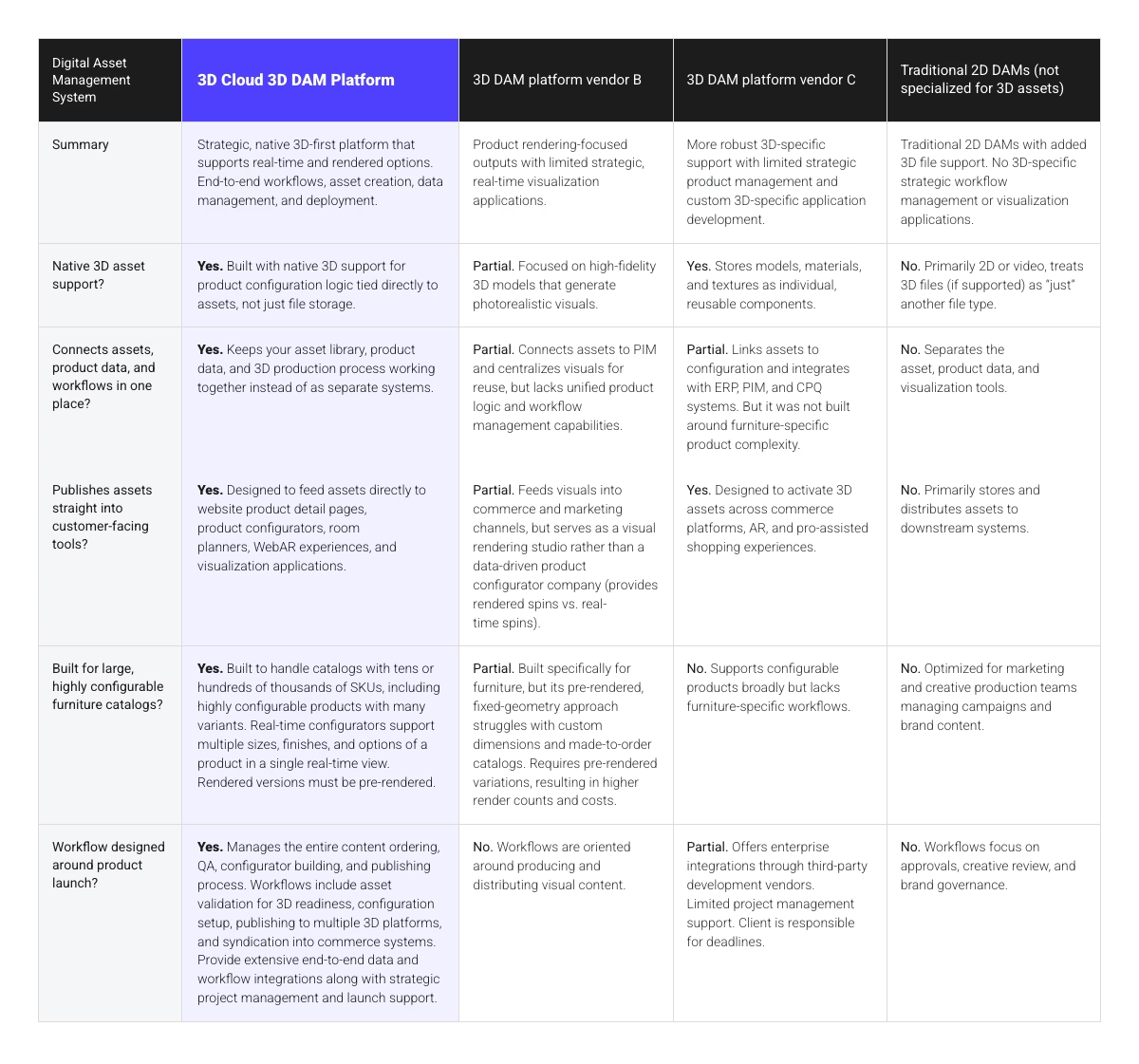
Vendor scorecard: quick reference guide
Get the information you need
This guide helps retailers and manufacturers understand:
- Common 3D content management pain points
- Key features and capabilities
- How a 3D DAM powers every visualization app
- How others are using this tech
Download the complete 3D Digital Asset Management Buyers Guide